Heme/Onc

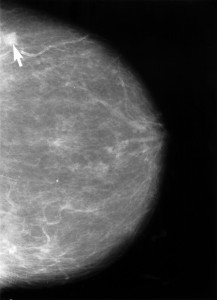
Breaking News: Initiate Mammography Screening at 50, not 40, Says USPSTF.

November 17, 2009
Breaking News: Initiate Mammography Screening at 50, not 40, Says USPSTF.

Aalok Turakhia, MD

As the debate over when to begin screening mammography in women rages on, the United States Prevention Service Task Force (USPSTF) added fuel to the fire by releasing a new recommendation statement in the November 17th issue of the Annals of Internal Medicine.  Applying to women aged ≥40 who are not at an increased genetic risk or have had chest irradiation, the USPSTF now recommends biennial screening in women between ages 50-74.  In February 2002, the task force first recommended that annual…

Read more »

PrimeCuts: This Week in the Journals

September 14, 2009
PrimeCuts: This Week in the Journals

Michael Ford MD

Faculty Peer Reviewed

Last spring, The New York Times published a series of articles that examined the status of “the War on Cancer,” initiated some 40 years ago by then president Richard Nixon. The halting pace of this war was made more poignant with the recent death of Senator Edward M. Kennedy, who had championed the effort from its inception. Certainly, much has been learned about cancer in the intervening decades, but while other illnesses saw dramatic…

Read more »

Myths and Realities: Do Power Lines Cause Cancer?

May 20, 2009
Myths and Realities: Do Power Lines Cause Cancer?

Aditya Mattoo MD

Faculty Peer Reviewed

Prompted by personal experience, I thought I would explore the alleged causative role of power lines in hematologic malignancies for the next installment of Myths and Realities. In recent years, two close family friends living at separate locations but in homes adjacent to lots with electrical transformers were diagnosed with Multiple Myeloma and Non-Hodgkin’s Lymphoma. Naturally, the coincidence was not unnoticed, so I decided to put power lines on trial…

Read more »

The Skinny on Cachexia…Can it be Treated?

April 22, 2009
The Skinny on Cachexia…Can it be Treated?

Michael T. Tees, MD, MPH

On the wards and in the clinic, the physician is frequently presented with a patient with a decreased appetite and alarming weight loss. The patient is likely frustrated with their own fraility, the family is upset at the poor nutritional state of their loved one, but the healthcare provider should be the most concerned. This clinical presentation without a prior diagnosis is worrisome, and if the patient does have an underlying etiology, this likely represents progression.…

Read more »

Clinical Questions: How do you dose argatroban?

April 16, 2009
Clinical Questions: How do you dose argatroban?

Frederick Gandolfo, MD

Case: An 85 year-old woman admitted to the hospital with pneumonia and after a prolonged hospital course developed heparin-induced thrombocytopenia (HIT). She is currently being treated with argatroban and her platelet counts are recovering. You are the covering physician and are called by the lab for an INR of 12 on her routine labs. The patient shows no signs of bleeding and she is not on warfarin. The PTT at the time…

Read more »

Prostate Cancer and Antioxidants

February 25, 2009

Commentary by Christopher Tully MD, PGY-1

Faculty Peer Reviewed

An apple a day. . . keeps the prostate cancer away? While it is an overstatement to say that an apple can prevent cancer, the notion of taking “something” to prevent cancer initiation and growth is nothing new. Primary prevention has long been a goal of researchers and physicians with the aim of preventing the morbidity and mortality associated with malignant disease. Prostate cancer is an appropriate choice in studying this topic since we…

Read more »

Tackling Cancer Control Worldwide: Report From the 2008 World Cancer Congress

December 11, 2008
Tackling Cancer Control Worldwide: Report From the 2008 World Cancer Congress

Commentary by Antonella Surbone MD PhD FACP, NYU Department of Medicine and Clinical Correlations Ethics Section Editor

On Tuesday December 9th 2008, leading global cancer organizations met in Atlanta to discuss the 2008 WHO World Cancer Report predicting that cancer will overtake heart disease as the world’s top killer by 2010, and that global cancer cases and deaths will more than double by 2030. They called on governments to act, by ratifying an international tobacco control treaty and by asking…

Read more »

Class Act: Soy and Breast Cancer – What’s the Connection?

November 26, 2008
Class Act: Soy and Breast Cancer – What’s the Connection?

Commentary by Alexis Melnick, NYU School of Medcine Class of 2009

Faculty peer reviewed

With the increasing popularity of soy foods in the American diet, there has been considerable debate over the link between soy and the risk of cancer, particularly cancer of the breast. The interest in this association stems from soy-containing isoflavones, soybean-derived compounds with chemical structures similar to estrogens that act as weak partial agonists at estrogen receptors. Initial data supported the chemopreventive potential of soy and were based on…

Read more »

Class Act: The Use of MRI in Breast Cancer Screening

August 28, 2008
Class Act: The Use of MRI in Breast Cancer Screening

Class act is a feature of Clinical Correlations written by NYU 3rd and 4th year medical students. Prior to publication, each commentary is thoroughly reviewed for content by a faculty member. 

Commentary by Daniel Green MSIV and Boris Kobrinsky MD, Assistant Professor, NYU Division of Oncology

In 2008, an estimated 182,460 women in the United States will be diagnosed with invasive breast cancer, and 40,480 women will die of the disease as it remains the demographic’s second leading cause of cancer mortality.(1)…

Read more »

Neutropenic Precautions Demystified

June 13, 2008
Neutropenic Precautions Demystified

Commentary by Rachana Jani MD, PGY-1 and Neal Steigbigel MD, Professor of Medicine (Infectious Diseases/Immunology)

Rachana Jani MD:  Walking onto an oncology floor, one cannot help but notice the precautionary signs that segregate these patients from the rest of the hospital. “No fresh fruits or flowers.” “Neutropenic isolation, please see nurse before entering.” The idea of neutropenic precautions first emerged in the 1960s when myelosuppressive therapy came to the forefront of cancer treatment. It only made sense that patients with an impaired immune…

Read more »

Future Medicine: The Search for a New Anticoagulant

April 16, 2008
Future Medicine: The Search for a New Anticoagulant

Future Medicine is a new section of Clinical Correlations devoted to hot areas of research and development in various fields of medicine. In tihis series, we will highlight treatments in their infancy, from basic research opening up new targets for treatment, to following small molecules throughout their clinical investigation. We will also bring you the latest on technology and devices, as well as perspectives on drug discovery from a business point of view. Watch out – the future is just around the corner!

Commentary by

Read more »

Grand Rounds: Breast Cancer Genomics

November 20, 2007
Grand Rounds: Breast Cancer Genomics

Commentary by Jonathan Willner MD, PGY-2

This week’s Medicine Grand Rounds speaker was Lisa Carey, MD, Associate Professor in Hematology/Oncology at the University of North Carolina and Medical Director of the UNC Breast Center.  Much of Dr. Carey’s research focuses on how an understanding of breast cancer genomics may tailor clinical therapy.

While the incidence of breast cancer has plateaued over the past few years, there has been a decline in the number of breast cancer deaths. The reason is thought to…

Read more »