Journal Club

Not So Rosi…

May 24, 2007
Not So Rosi…

Commentary by Seagram Villagomez MD, Chief Resident

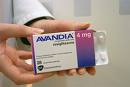
Since its approval in 1999, nearly 1 million Americans have used the thiazolidinedione (TZD) rosiglitazone (Avandia – GlaxoSmithKline) for the treatment of Type 2 Diabetes.  However, in a drug class which seems plagued by concerns, the safety profile associated with rosiglitazone has been brought to question. Previously, troglitazone (Rezulin) was pulled off the market secondary to hepatoxicity, while muraglitazar was not approved by the FDA given adverse cardiovascular events during early clinical trials.  In a…

Read more »

How Do You Estimate Stroke Risk After a Transient Ischemic Attack?

April 24, 2007
How Do You Estimate Stroke Risk After a Transient Ischemic Attack?

By: Alana Choy-Shan, MD PGY-3
Transient ischemic attacks (TIAs) are known to be a harbinger of stroke, however it is difficult for physicians to estimate individual stroke risk. Previously, the two systems used to predict short-term risk of stroke after a TIA were the California and ABCD scores. Both scores are based on clinical factors with several key elements in common. However, neither scoring system was devised to predict stroke within 48 hours of TIA, a time period which may be most clinically relevant.…

Read more »

New Guidelines on the Diagnosis and Treatment of Venous Thromboembolism-Part 1

April 12, 2007
New Guidelines on the Diagnosis and Treatment of Venous Thromboembolism-Part 1

Commentary By: Margaret Horlick, MD, PGY-3

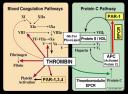
New guidelines on the diagnosis and treatment of venous thromboembolism (VTE) were recently jointly issued by the American Academy of Family Physicians and the American College of Physicians. The guidelines are based on a systematic review of the evidence and are published, along with the systematic reviews, in the 2/2007 and 3/2007 issues of the Annals of Internal Medicine.

According to the reviews, there are 600,000 cases of VTE in the US annually, and the…

Read more »

Does Screening for Lung Cancer Improve Mortality?

April 10, 2007
Does Screening for Lung Cancer Improve Mortality?

Commentary By: Anna Dvorak, MDPGY-3

Lung cancer is the number one cause of cancer mortality in both men and women. Screening patients at risk for lung cancer might reduce mortality if it helps find cancers at an early stage while they are still resectable. Randomized studies done in the 1970s showed that screening for lung cancer with chest x-ray did not support this theory. Chest x-rays identified more small tumors, but resecting them did not improve mortality. The question of whether screening with…

Read more »

Does the Overuse of Macrolides Lead to Antibiotic Resistance?

March 12, 2007
Does the Overuse of Macrolides Lead to Antibiotic Resistance?

Commentary By: Danise Schiliro, PGY-3

Although intuitively we always worry about creating drug resistance when using antibiotics, there is a surprising lack of well done studies that show a clear causal effect of antibiotic use on the development of subsequent drug resistance. A recent study in Lancet may however lead us to re-evaluate our use of macrolides in everyday practice.

Azithromycin and clarithromycin are two of the most commonly used macrolides for treating respiratory infections. Azithromycin has a long half-life, making it…

Read more »

Should patients with Anemia and a Normal Ferritin Undergo Colonoscopy?

February 16, 2007
Should patients with Anemia and a Normal Ferritin Undergo Colonoscopy?

Commentary By: Joshua Olstein PGY-3

Second only to lung cancer, colon cancer claimed an estimated 55,000 lives in the United States in 2006. In an effort to reduce colon cancer morbidity and mortality, multiple screening tests have been developed to detect early disease among asymptomatic individuals. The 2003 American Gastroenterology Associations guidelines for screening asymptomatic individuals recommended colonoscopy as a preferred method of screening.

Due to a higher risk of colonic neoplasm, patients with unexplained iron-deficiency anemia are not included in these…

Read more »

A drug for NASH that may work?

January 24, 2007
A drug for NASH that may work?

Commentary By: Sandra D'Angelo, PGY-3

Nonalcoholic steatohepatitis (NASH) is a disease in which patients have features of alcoholic hepatitis on liver biopsy without a prior history of significant alcohol consumption and negative hepatitis serologies. It is unclear how prevalent this disease is because most patients with liver function abnormalities do not undergo liver biopsy.  In those that have had a liver biopsy, the prevalence is estimated to be 7-9%.  It is most common in women between the ages of 40-60 and…

Read more »

Should we recommend mammography screening for women between the ages of 40-50?

December 22, 2006
Should we recommend mammography screening for women between the ages of 40-50?

In a recent article in the Lancet, this question was addressed by a group of investigators led by Sue Moss, Ph.D. from the University of Leeds.  Currently, the  National Cancer Institute, U.S. Preventative Health Services Task Force and the American Cancer Society all recommend screening at a younger age(those between 40-50).  The task force, however, does recommend educating your patients about the potential risks/benefits regarding mammography at a younger age.  Screening women older than 50 has been shown to reduce mortality from breast cancer…

Read more »

Should You Recommend Surgery or Conservative Care for Disc Herniation?

November 29, 2006
Should You Recommend Surgery or Conservative Care for Disc Herniation?

In the November 22nd issue of JAMA, the results of two studies from the Spine Patient Outcomes Research Trial (SPORT) on lumbar disk surgery for persistent radicular pain are reported.  Both these studies sought to assess the efficacy of surgery for lumbar disk herniation as compared to nonoperative treatment, including counseling, anti-inflammatory medications, injections, and physical therapy. It is important to note that specific inclusion criteria were radicular pain as well as imaging showing disk herniation.  Because a large number of study participants declined…

Read more »

Epogen and Anemia-Less is More

November 17, 2006
Epogen and Anemia-Less is More

Singh AK et al. Correction of anemia with epoetin alfa in chronic kidney disease. N Engl J Med 2006 Nov 16; 355:2085-98.

Drüeke TB et al. Normalization of hemoglobin level in patients with chronic kidney disease and anemia. N Engl J Med 2006 Nov 16; 355:2071-84.

It’s always been unclear what target hgb we should be shooting for in our patients on epogen/aranesp.  These 2 articles in the NEJM definitely come close to answering this question.  In the CREATE study…

Read more »

NYU’s Dr. Hochman Releases OAT Results

November 16, 2006
NYU’s Dr. Hochman Releases OAT Results

                          Hochman JS et al. for the Occluded Artery Trial Investigators. Coronary intervention for persistent occlusion after myocardial infarction. N Engl J Med 2006 Nov 14; 355.

Reperfusion via thrombolytics or PCI in patients with acute STEMI has been shown to reduce mortality and maximize myocardial salvage.  It has been less clear whether patients with late presentations of MI are afforded the same benefits.  Though there was no official consensus, late revascularization of the infarct vessel was frequently employed.  At the AHA meeting yesterday,…

Read more »