
OLYMPUS DIGITAL CAMERA
By Bennett Yang
Peer Reviewed
An 84-year-old woman presents to the emergency department with fatigue and mild confusion. Her vitals are stable, she’s afebrile, and her exam is unremarkable. Labs are mostly normal, but the urinalysis shows moderate leukocyte esterase and bacteria. A urine culture is sent, and a broad-spectrum antibiotic is started. This scenario is routine, but the decision to treat may not be evidence-based. A positive urine culture does not equal a urinary tract infection (UTI), especially in patients without classic urinary symptoms. In fact, indiscriminate treatment of what may be asymptomatic bacteriuria (ASB) is a leading cause of unnecessary antibiotic use.1 So, how can we distinguish infection from colonization, and when is treatment truly indicated?
UTI is defined as urinary symptoms such as dysuria, frequency, urgency, or costovertebral angle tenderness in conjunction with significant bacteriuria. What is significant? Traditionally ?10? colony-forming units (CFU) per high power field (hpf) on urine culture.2 In symptomatic women, even lower colony counts (as low as ?10² CFU/hpf) may be clinically meaningful.2 By contrast, ASB refers to bacteria in the urine without any symptoms attributable to the urinary tract. In women, including pregnant women, a diagnosis of ASB requires two consecutive positive specimens with the same organism at ?10? CFU/hpf, while for men, one positive specimen is sufficient.3 Though both UTI and ASB involve bacteriuria, the presence of symptoms is the critical distinction between them.2,3
The Infectious Diseases Society of America (IDSA) guidelines are clear: ASB should not be treated in most populations, as doing so offers no clinical benefit and may increase antimicrobial resistance.4,5 The two major exceptions are pregnant patients and those undergoing urological procedures involving anticipated mucosal bleeding, where treatment of ASB has been shown to reduce the risk of complications.4,6 In pregnancy, ASB is associated with increased rates of pyelonephritis and preterm birth, prompting guidelines from the American College of Obstetricians and Gynecologists (ACOG) to recommend screening and treatment during the first trimester.7
Despite the guidelines, overtreatment remains widespread. It is common for urine cultures to be ordered in patients without urinary symptoms, especially when nonspecific presentations such as delirium prompt a broad workup. In these cases, positive urinalysis findings (i.e., leukocyte esterase, nitrites, or bacteriuria) are often interpreted as sufficient evidence of UTI, even when they may reflect colonization rather than infection. This practice is more common in elderly patients, those in long-term care, and in patients with chronic indwelling urinary catheters.4
Treating ASB inappropriately is not benign. It exposes patients to risks such as Clostridioides difficile infection and adverse drug reactions (including delirium and QT prolongation) and contributes to the growing public health threat of antibiotic resistance. Worse still, labeling a patient with a UTI can anchor the diagnostic process and delay identification of the true underlying cause of their symptoms.
In clinical practice, several principles can help avoid these pitfalls. First, do not culture urine in patients without urinary symptoms, unless they fall into one of the two major guideline-endorsed exceptions.4 Second, recognize that urinalysis findings alone cannot distinguish ASB from UTI: symptoms are the key. Third, in catheterized patients, remove and replace the catheter before sending a urine specimen to minimize contamination, and evaluate for persistent symptoms.8 Finally, let clinical context, not just lab values, guide decision-making.
In summary, ASB is not synonymous with UTI. Although both involve bacteria in the urine, infection cannot be diagnosed on that basis alone, despite how reflexively we associate bacteria with disease. Unnecessary treatment can cause real harm. Learning to distinguish between colonization and infection reflects a broader principle in medicine: thoughtful restraint, informed by evidence, can be as vital as decisive action. Sometimes, doing less is the most responsible form of care.
Bennett Yang is a Class of 2027 medical student at NYU Grossman School of Medicine
Reviewed by Michael Tanner, Executive Editor, Clinical Correlations
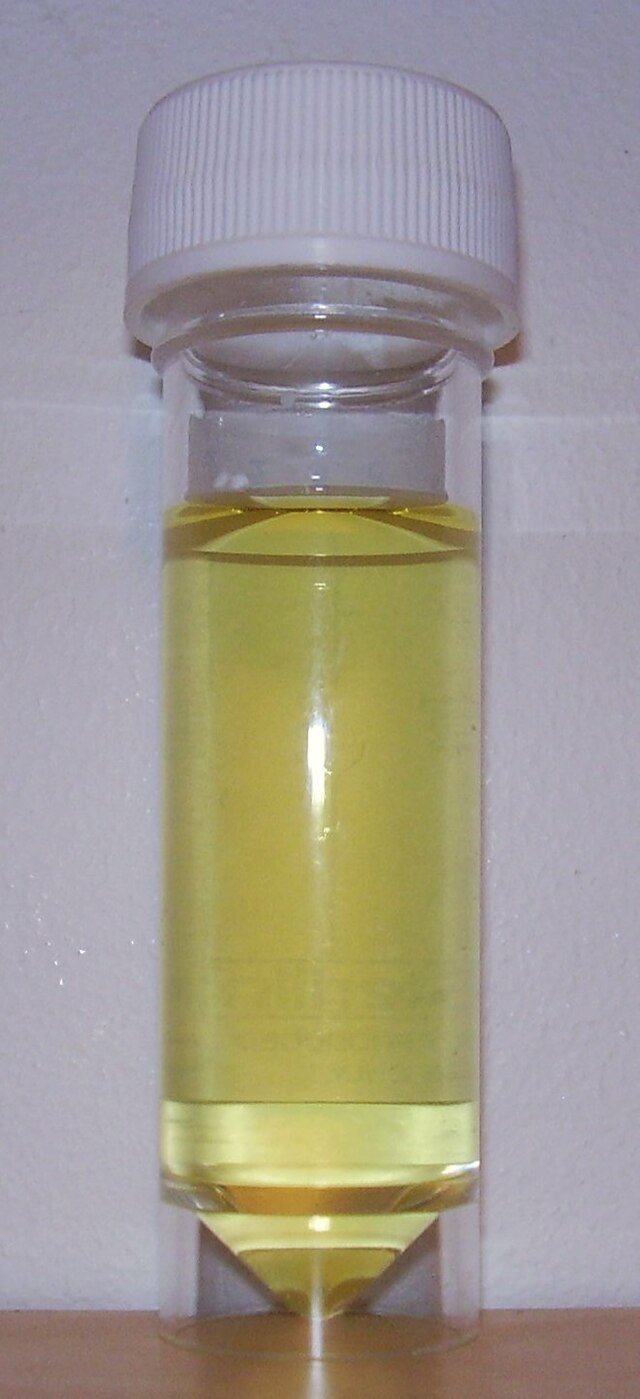
Image courtesy of Wikimedia Commons: en:User:Markhamilton, Public domain, https://commons.wikimedia.org/w/index.php?search=urine&title=Special%3AMediaSearch&type=image
References
- Trautner BW, Grigoryan L. Approach to a positive urine culture in a patient without urinary symptoms. Infect Dis Clin North Am. 2014;28(1):15-31. doi:10.1016/j.idc.2013.09.005. https://pubmed.ncbi.nlm.nih.gov/24484572/
- Chu CM, Lowder JL. Diagnosis and treatment of urinary tract infections across age groups. Am J Obstet Gynecol. 2018;219(1):40-51. doi:10.1016/j.ajog.2017.12.231. https://pubmed.ncbi.nlm.nih.gov/29305250/
- Wiley Z, Jacob JT, Burd EM. Targeting Asymptomatic Bacteriuria in Antimicrobial Stewardship: the Role of the Microbiology Laboratory. J Clin Microbiol. 2020;58(5):e00518-18. Print 2020 Apr 23. doi:10.1128/JCM.00518-18.
- Nicolle LE, Gupta K, Bradley SF, et al. Clinical Practice Guideline for the Management of Asymptomatic Bacteriuria: 2019 Update by the Infectious Diseases Society of America. Clin Infect Dis. 2019;68(10):e83-e110. doi:10.1093/cid/ciy1121. https://www.idsociety.org/practice-guideline/asymptomatic-bacteriuria/
- Luu T, Albarillo FS. Asymptomatic Bacteriuria: Prevalence, Diagnosis, Management, and Current Antimicrobial Stewardship Implementations. Am J Med. 2022;135(8):e236-e244. doi:10.1016/j.amjmed.2022.03.015.
- Colgan R, Jaffe GA, Nicolle LE. Asymptomatic Bacteriuria. Am Fam Physician. 2020;102(2):99-104.
- Miller JM, Binnicker MJ, Campbell S, et al. Guide to Utilization of the Microbiology Laboratory for Diagnosis of Infectious Diseases: 2024 Update by the Infectious Diseases Society of America (IDSA) and the American Society for Microbiology (ASM). Clin Infect Dis. Published online 2024 Mar 5. doi:10.1093/cid/ciae104.
- Hooton TM, Bradley SF, Cardenas DD, et al. Diagnosis, prevention, and treatment of catheter-associated urinary tract infection in adults: 2009 International Clinical Practice Guidelines from the Infectious Diseases Society of America. Clin Infect Dis. 2010;50(5):625-663. doi:10.1086/650482.