
 By Ashley Lewis
Peer Reviewed
In the US, patients experience serious barriers to accessing mental healthcare. Over half of counties in the US lack a psychiatrist, and most patients with mental illness did not receive mental health services in 2021.1 Given this significant need, primary care providers serve critical roles in managing mental health conditions. In 2016, 16% of visits in primary care were mental health-related, a nearly 50% increase over the last ten years.2 This is partially reflective of an increase in demand by patients for mental healthcare. For example, the incidence of attention deficit hyperactivity disorder (ADHD) diagnoses has risen substantially in the last twenty years, especially after the COVID-19 pandemic.3 As of 2023, 6% of the adult population report having an ADHD diagnosis given by a healthcare professional.4 The combination of limited access to psychiatric care and increased need for ADHD treatment has made primary care providers leading prescribers of stimulant medications. The two most commonly prescribed stimulant medications for ADHD in adults are methylphenidate (Ritalin) and amphetamine-dextroamphetamine (Adderall). This article will discuss three aspects of prescribing stimulant medication for ADHD in a primary care setting: 1) The prevalence and pattern of stimulant medication prescribing in primary care providers, 2) Safety considerations for stimulant prescribing in primary care. 3) Differences in outcomes for patients with ADHD medically managed by primary care providers compared to psychiatrists.
Medication plays a central role in managing ADHD symptoms. At high doses, stimulants can create hyperarousal and activation. But at low doses, stimulant medications increase dopamine and norepinephrine in the prefrontal cortex that act to process information more efficiently and reduce “noise.”5 This can help reduce ADHD symptoms such as hyperactivity, inattention, and impulsivity. Primary care physicians prescribe nearly a fifth of stimulant medications, the third- highest prescribing specialty after psychiatry and pediatrics.6 Stimulants were prescribed off-label (no associated ADHD diagnosis) in 66% of visits with non-psychiatrists, compared to 38% of visits with psychiatrists.7 Primary care physicians had a 10% increase in incident (never-previously issued) prescriptions of stimulant medication during the COVID-19 pandemic, compared to a 1% decrease in incident stimulant prescriptions by psychiatrists.8
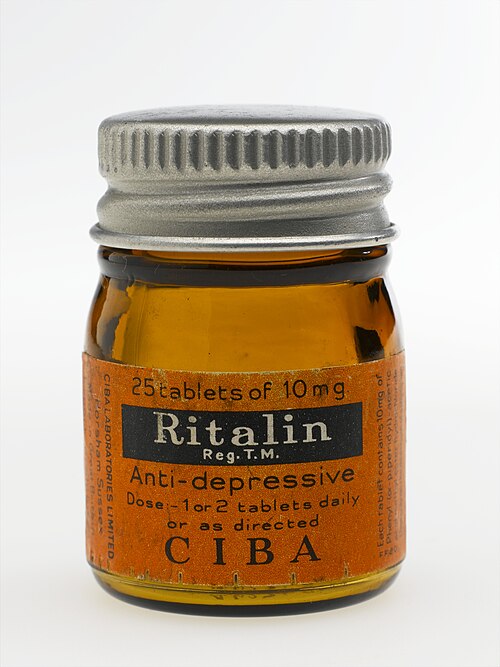
Non-psychiatrists are also more likely to prescribe amphetamine (Adderall) over methylphenidate (Ritalin), an important factor in medical management, since the medications have differing side effect profiles.9 Generally, Adderall has a longer-half life than Ritalin, making both its therapeutic and adverse effects last longer. As for side effects, Adderall is more likely to cause psychiatric and sleep disturbances compared to Ritalin, which is more likely to cause gastrointestinal symptoms.10,11 Higher rates have been reported of misuse and diversion among Adderall-prescribed patients compared to Ritalin-prescribed patients.12 A meta-analysis of placebo-controlled studies found that, for adults, Ritalin improved ADHD symptoms the most. Notably, Ritalin performed best at controlling ADHD symptoms for individuals with substance use disorders, without worsening their substance use.13 Ultimately, when clinicians are deciding which medication to prescribe, they should weigh an individual patient’s psychiatric and substance use history, degree of dysfunction from ADHD symptoms, ability to adhere, and preference for dosing frequency.
Overall, stimulant medication is safe when supervised by a provider and taken as prescribed. Beyond slight increases in blood pressure, there is no evidence of an association between indicated doses of stimulant medications with an increase in serious cardiovascular events or sudden death in large cohort studies and randomized control trials.14 Studies of the rate of diversion or misuse of stimulant prescriptions show that it is highest among adults with ADHD and patients with comorbid substance use conditions.15 Since patients with ADHD have a higher likelihood of also having comorbid substance use disorders, treating their ADHD symptoms along with their substance use is challenging.16 Diversion or misuse is important for clinicians to recognize, as it can lead to the use of stimulants at higher doses, thus increasing the risk of serious health consequences like acute cardiovascular events, psychosis, and overdose.15 Studies report that among prescribed stimulants, 25% of patients report misuse and 9% meet prescription substance-use disorder criteria, with the highest risk for those prescribed amphetamines.17 Those with prescription substance use disorder were more likely to get their stimulants from a physician than from a friend or relative. Other studies show that getting a first-time prescription from a general practitioner is a predictor of stimulant misuse.18 Concerns related to misuse must be balanced with adequate treatment of ADHD. A large portion of patients with ADHD go without mental health services, and medication has shown to be an effective treatment for symptoms.19 This highlights the importance of initiating conversations with patients on how they use their prescription stimulants and of screening for substance use disorders to ensure adequate management of ADHD symptoms alongside potential unhealthy substance use.
There have been few studies directly assessing whether ADHD medication management quality or safety outcomes differ by provider specialties. One study shows psychiatrists were more likely to treat comorbid illnesses alongside ADHD, but both primary care providers and psychiatrists had low levels of follow-up visits.20 Importantly, this study also showed that primary care providers had slightly shorter time to follow-up, underscoring the improvement in access that primary care can provide. One study reviewed ten quality metrics of ADHD management in primary care and found mixed results. Primary care providers had high-quality documentation of ADHD diagnoses but lagged in reviewing medication contraindications and alternative treatments with patients.21 Compared to psychiatrists, generalists reported having greater difficulty in determining optimal treatment and were less likely to prescribe long-acting medications.22 This highlights that treatment options may differ for patients seeing psychiatrists or primary care physicians. The difference may be due to physician comfort with medication management, thereby offering patients a more limited group of medications to choose from. Alternatively, the difference may arise because more challenging patients are referred to specialty care and don’t require as much advanced medical management for symptom control, such as long-acting stimulants. Given the prominent role primary care providers have in ADHD treatment, further research is needed to understand how outcomes may differ when patients are managed by primary care providers compared to psychiatric providers.
Although there may be increased risks of stimulant misuse through primary care management, PCPs provide essential access to psychiatric medications for many patients with ADHD. Therefore, there need to be policies for PCPs to prevent stimulant diversion and to assist patients potentially struggling with ADHD and co-occurring substance use disorders. The Prescription Monitoring Program (PMP)/I-STOP registry allows clinicians to access their patients’ controlled- substance prescription history, enabling PCPs to identify concerning patterns. A recent study showed that patients of primary care physicians who received training on signs of stimulant misuse had significantly reduced diversion risk compared to patients of PCPs without training.23 For PCPs interested in medically managing patients with ADHD, additional training on preventing diversion may be an important intervention to balance patients’ need for medications and preventing misuse. If the provider and/or patient are concerned about potential stimulant misuse, nonstimulant and behavioral interventions can be considered, depending on the severity of ADHD symptoms.
There are few official guidelines on best practices for ADHD prescribing in primary care. The American Academy of Family Physicians (AAFP) provides an outstanding toolkit for diagnosing, treating, and monitoring ADHD in primary care settings.24 As discussed, primary care providers are usually the first point of healthcare for patients with ADHD. Many patients’ ADHD medications and symptoms are managed solely by their primary care provider, given the ease of access and affordability compared to psychiatric providers. While more research is essential to delineate best practices for stimulant prescribing and ADHD management in primary care, partnership between psychiatry and primary care can ultimately break down care siloes and facilitate clinical management, particularly for high-needs patients.
Ashley Lewis is a Class of 2027 medical student at NYU Grossman School of Medicine
Reviewed by Michael Tanner, MD, Executive Editor, Clinical Correlations
Image courtesy of Wikimedia Commons, See page for author, CC BY 4.0 https://creativecommons.org/licenses/by/4.0
References
- Donohue JM, Goetz JL, Song Z. Who Gets Mental Health Care?–The Role of Burden and Cash-Paying Markets. JAMA Health Forum. 2024;5(3):e240210. https://pmc.ncbi.nlm.nih.gov/articles/PMC11014756/
- Harris E. More Primary Care Visits Address Mental Health. JAMA. 2023;329(9):704.
- Paul ML, Sheth P, Davis R, Chrusciel T, Messias E. Incidence of Attention?Deficit/Hyperactivity Disorder Between 2016 and 2023: A Retrospective Cohort. Psychiatr Res Clin Pract. 2025;7(1):18-24.
- Staley BS. Attention-Deficit/Hyperactivity disorder diagnosis, treatment, and telehealth use in adults–National Center for Health Statistics Rapid Surveys System, United States, October-November 2023. MMWR Morb Mortal Wkly Rep. 2024;73(40):890-895. https://pubmed.ncbi.nlm.nih.gov/39388378/
- Stahl SM. Mechanism of action of stimulants in attention-deficit/hyperactivity disorder. J Clin Psychiatry. 2010;71(1):12-13.
- Board AR, Guy G, Jones CM, Hoots B. Trends in stimulant dispensing by age, sex, state of residence, and prescriber specialty–United States, 2014–2019. Drug Alcohol Depend. 2020;217:108297. https://pubmed.ncbi.nlm.nih.gov/32961454/
- Olfson M, Blanco C, Wang S, Greenhill LL. Trends in office-based treatment of adults with stimulants in the United States. J Clin Psychiatry. 2013;74(1):43-50.
- Chai G, Xu J, Goyal S, et al. Trends in incident prescriptions for behavioral health medications in the US, 2018-2022. JAMA Psychiatry. 2024;81(4):396-405.
- Wei W, Chen L, Zhou H, et al. Safety profiles of methylphenidate, amphetamine, and atomoxetine: analysis of spontaneous reports submitted to the food and drug administration adverse event reporting system. Front Pharmacol. 2023;14:1208456.
- Arnold LE. Methylphenidate vs. amphetamine: Comparative review. J Atten Disord. 2000;3(4):200-211. https://journals.sagepub.com/doi/10.1177/108705470000300403
- Moran LV, Ongur D, Hsu J, Castro VM, Perlis RH, Schneeweiss S. Psychosis with methylphenidate or amphetamine in patients with ADHD. N Engl J Med. 2019;380(12):1128-1138.
- Anderer S. Prescription Stimulant Misuse Affects About 1 in 4 Users. JAMA. 2025;333(19):1658-1658.
- Peterson K, McDonagh MS, Fu R. Comparative benefits and harms of competing medications for adults with attention-deficit hyperactivity disorder: a systematic review and indirect comparison meta-analysis. Psychopharmacology (Berl). 2008;197(1):1-11.
- Fredriksen M, Halmøy A, Faraone SV, Haavik J. Long-term efficacy and safety of treatment with stimulants and atomoxetine in adult ADHD: a review of controlled and naturalistic studies. Eur Neuropsychopharmacol. 2013;23(6):508-527.
- Kaye S, Darke S. The diversion and misuse of pharmaceutical stimulants: what do we know and why should we care? Addiction. 2012;107(3):467-477.
- Magon R, Müller U. ADHD with comorbid substance use disorder: Review of treatment. Adv Psychiatr Treat. 2012;18(6):436-446.
- Han B, Jones CM, Volkow ND, et al. Prescription Stimulant Use, Misuse, and Use Disorder Among US Adults Aged 18 to 64 Years. JAMA Psychiatry. 2025;82(6):572-581.
- Rasmussen L, Zoëga H, Hallas J, Pottegård A. Deviant patterns of methylphenidate use in adults: a Danish nationwide registry?based drug utilization study. Pharmacoepidemiol Drug Saf. 2015;24(11):1189-1196.
- Olfson M, Blanco C, Wang S, Laje G, Correll CU. National trends in the mental health care of children, adolescents, and adults by office-based physicians. JAMA Psychiatry. 2014;71(1):81-90.
- Patel A, Medhekar R, Ochoa-Perez M, et al. Care provision and prescribing practices of physicians treating children and adolescents with ADHD. Psychiatr Serv. 2017;68(7):681-688.
- Callen EF, Clay TL, Alai J, et al. Progress and pitfalls in the provision of quality care for adults with attention deficit hyperactivity disorder in primary care. J Atten Disord. 2023;27(6):575-582.
- Adler LA, Farahbakhshian S, Romero B, Flood E, Doll H. Healthcare provider perspectives on diagnosing and treating adults with attention-deficit/hyperactivity disorder. Postgrad Med. 2019;131(7):461-472.
- Molina BS, Kipp HL, Joseph HM, et al. Stimulant diversion risk among college students treated for ADHD: Primary care provider prevention training. Acad Pediatr. 2020;20(1):119-127.
- American Academy of Family Physicians. Treatment and Management of ADHD in Adults: Management Approach and Treatment Option. https://www.aafp.org/family-physician/patient-care/prevention-wellness/emotional-wellbeing/adhd-toolkit/treatment-and-management.html Published 2025. Accessed April 17, 2025.