 By Katherine Husk
Faculty Peer Reviewed
A healthy 40-year-old woman comes into your office for a routine health exam. After you have performed a clinical breast exam, she asks you whether she should be examining her breasts on …

By Katherine Husk
Faculty Peer Reviewed
A healthy 40-year-old woman comes into your office for a routine health exam. After you have performed a clinical breast exam, she asks you whether she should be examining her breasts on …
 By Keri Herzog, MD
Faculty Peer Reviewed
The patient is a 62-year-old male who presented to an outpatient medical clinic complaining of a growing, slightly painful, periumbilical mass, and mild lower gastrointestinal discomfort over the last 4 months. On examination, the …
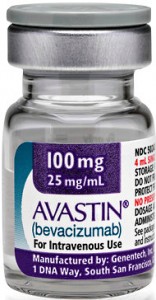 By Antonella Surbone MD PhDÂ and Jerome Lowenstein MD
The recent hearings at the Food and Drug Administration regarding the revocation of approval for the use of Avastin in the treatment of breast cancer [1,2,3] bring into sharp focus several …
 By David Altszuler, Class of 2012
Faculty Peer Reviewed
An empiric association between occult malignancy and thrombophlebitis has been recognized since Trousseau first reported the syndrome in 1865.[1]Â The mechanism by which cancer predisposes to thrombophilia has not been fully elucidated; …
 By Joanna Becker
Faculty Peer Reviewed
Patients who are placed on long-term warfarin (Coumadin) therapy are sent home with a lengthy list of restrictions to minimize variations in warfarin efficacy. The agents that can alter warfarin levels can be divided …
 Please enjoy this post from the Clinical Correlations archives first posted May 20, 2009
By Aditya Mattoo, MD
Faculty Peer Reviewed
Prompted by personal experience, I thought I …
Please enjoy this post from the Clinical Correlations archives first posted April 22, 2009
Michael T. Tees, MD, MPH
On the wards and in the clinic, the physician …
 By Michael Ford, MD
Faculty Peer Reviewed
 Â
                                            Â
2.65 x 10[13]
# of erythrocytes in circulation, assuming Hematocrit 45%[1]
Â
Â
Â
Â
120
Lifespan in days of an erythrocyte[2]
Â
Â
Â
Â
2.5 million
# of new erythrocytes produced each second to replace dying cellsâ€
Â
Â
Â
Â
5.3 …