 Commentary by Josh Remick MD, PGY-3
Hypertriglyceridemia is defined by the NCEP guidelines for treatment as a fasting triglyceride level greater than 200 mg/dL after the target LDL-C level has been achieved (1). When triglyceride levels …

Commentary by Josh Remick MD, PGY-3
Hypertriglyceridemia is defined by the NCEP guidelines for treatment as a fasting triglyceride level greater than 200 mg/dL after the target LDL-C level has been achieved (1). When triglyceride levels …
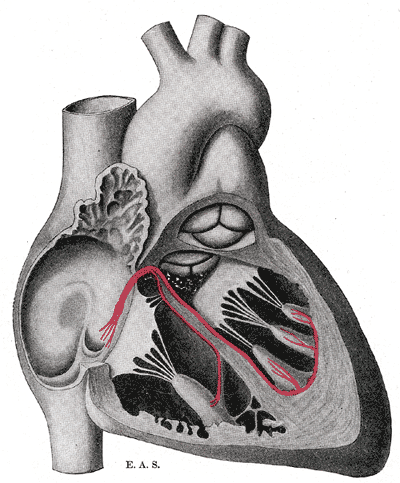 Commentary by William Slater, MD Associate Professor of Medicine, Divsion of Cardiology
The vast majority of patients with persistent AF can be rendered asymptomatic with AV nodal blocking drugs and don’t require ablation. Digitalis …
 Commentary by Timothy Wong, MD
A group of short articles focusing on the consequences and management of atrial fibrillation (AF) recently appeared in the July 7th issue of the Health section of …
 By: Melissa Freeman, MD, PGY1
For over a decade now, statins, or 3-hydroxy-3-methylglutaryl coenzyme A reductase inhibitors, have facilitated millions of patients in the management of their atherosclerosis. Statins are known for their ability to reduce hepatic lipoproteins, up-regulate …
 Commentary By: Steven Sedlis, MD Associate Professor of Medicine, Chief, Division of Cardiology Manhattan Veterans Administration Medical Center
The 56th annual scientific session of the American College of Cardiology was held in New Orleans on March 24-27. The site of the meeting …
 Commentary By: Josh Olstein, PGY-3
Earlier this month the FDA approved Tekturna (aliskiren) the first drug in a novel class of antihypertensives that work by directly inhibiting renin. While Novartis has yet to release pricing information, don’t expect to see this …
Commentary by Cara Litvin, PGY-3
The results of one of the more remarkable studies from the meeting of the American College of Cardiology were presented on Monday, along with the simultaneous early publishing of the study online in the New England Journal of …
 A 26 year old woman developed uncontrolled hypertension peripartum 5 years prior to this presentation After diagnosis she was intermittently compliant with her medication although remained asymptomatic. She now presents with new onset congestive heart failure. On admission, she was …