Radiology

CT Colonography-The Future of Colorectal Cancer Screening?

August 21, 2009
CT Colonography-The Future of Colorectal Cancer Screening?

Ely R. Felker


Faculty Peer Reviewed

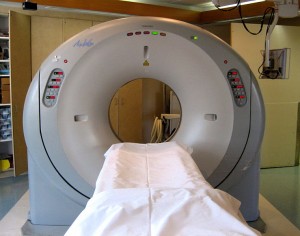
The patient is a 52 year-old white male who presented to his internist for a routine examination. He has no family history of colorectal cancer. He has not previously been screened. He recently heard about CT colonography and would like to know how it compares to conventional colonoscopy. Colorectal cancer (CRC) is the third most common cancer and the second most common cause of cancer death…

Read more »

X-Ray Visions: What is your radiation risk?

January 29, 2009
X-Ray Visions: What is your radiation risk?

Commentary by Michael Hanley MD PGY-3 and James D. Koonce MD PGY-3, Department of Radiology, Medical University of South Carolina

www.X-rayRisk.com - A Free Online Calculator that Estimates an Individual’s Additional Risk of Cancer as a Result of Medical Imaging

An estimated 62 million CT scans are obtained in the United States each year.(1) While debated, a recent study suggests that radiation exposure from medical imaging may be responsible for 1-3% of cancers worldwide.(2) With recent media coverage focusing on the risk of cancer from medical…

Read more »

Cardiac MRI: Assessing Myocardial Viability

December 18, 2008
Cardiac MRI: Assessing Myocardial Viability

Commentary by Muhammad Ghumman MD, PGY-3

Faculty Peer Reviewed

Clinical Case:

A 65 year old male with hypertension, iron deficiency anemia, and atrial fibrillation (not anticoagulated due to prior gastrointestinal bleed,) presents with new onset lower extremity edema, dyspnea on exertion, orthopnea, and profound fatigue. Physical exam is significant for jugular venous distention to 17 cm, bilateral basilar crackles on lung exam, 3+ pitting edema in the lower extremities to mid thighs, and guaiac positive brown stool. Labs are significant for hemoglobin of 5.4,…

Read more »

Class Act: The Use of MRI in Breast Cancer Screening

August 28, 2008
Class Act: The Use of MRI in Breast Cancer Screening

Class act is a feature of Clinical Correlations written by NYU 3rd and 4th year medical students. Prior to publication, each commentary is thoroughly reviewed for content by a faculty member. 

Commentary by Daniel Green MSIV and Boris Kobrinsky MD, Assistant Professor, NYU Division of Oncology

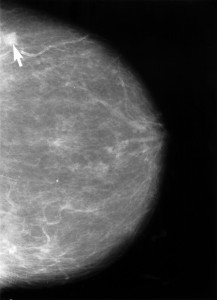
In 2008, an estimated 182,460 women in the United States will be diagnosed with invasive breast cancer, and 40,480 women will die of the disease as it remains the demographic’s second leading cause of cancer mortality.(1)…

Read more »

Grand Rounds: “Nephrogenic systemic fibrosis”

June 5, 2008
Grand Rounds: “Nephrogenic systemic fibrosis”

Commentary by Jatin Roper MD, PGY-3

Medical Grand Rounds today was presented last week by Dr. Shawn Cowper, Assistant Professor of Dermatology and Pathology at Yale University School of Medicine. Grand Rounds began with the presentation of a case from Tisch Hospital:

A 46 year old female with a history of end-stage renal disease secondary to diffuse-proliferative glomerulonephritis on hemodialysis, systemic lupus erythematosis, antiphospholipid antibody syndrome, and IVC thrombosis presents to a dermatology consultant for progressive hardness, tightness, and tenderness…

Read more »

Noninvasive Cardiac Imaging: Coronary CT Angiography

March 26, 2008
Noninvasive Cardiac Imaging: Coronary CT Angiography

Commentary by Matt LaBarbera MD, PGY-3 and Rob Donnino, MD Instructor of Medicine, Division of Cardiology

Coronary CT angiography (CCTA) is a noninvasive imaging modality which can be used to evaluate the anatomy of the coronary arteries. Unlike coronary artery calcium scoring, which utilizes noncontrast CT to assess atherosclerotic disease burden, CCTA allows direct visualization of the coronary artery wall and lumen with the administration of intravenous contrast. The degree of coronary luminal stenosis can be reliably estimated, as can the presence or absence…

Read more »

Mystery Quiz

January 29, 2008
Mystery Quiz

Posted By: Vivian Hayashi, MD, Instructor of Clinical Medicine, Division of General Internal Medicine and Robert Smith, MD Associate Professor of Medicine, Division Pulmonary and Critical Care Medicine

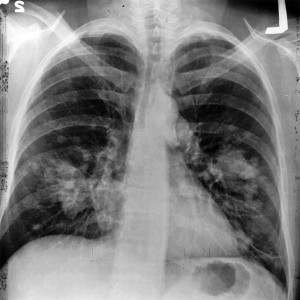
A 78 year old man with a history of ankylosing spondylitis and known cardiac disease associated with congestive heart failure, presented with breathlessness one year prior to admission.  Over the most recent months, the patient complained of cough productive of voluminous frothy, watery sputum.  Medications included digoxin, furosemide, irbesartan, isosorbide, metoprolol, spirinolactone, simvastatin, and warfarin.  The patient…

Read more »

X-Ray Visions: Mystery Quiz

August 22, 2007
X-Ray Visions: Mystery Quiz

A 46 year old male with a past medical history of hypertension presents to the emergency room complaining of constant throbbing epigastric pain for one day. He rates the pain as 7/10, with some radiation to his chest. He reports some mild nausea, but denies diarrhea or constipation.  He does endorse a bloated sensation for the past few days. He has not had any fevers and denies melana or hematochezia.  He is an avid biker and reports unlimited exercise tolerance. He denies any previous history of chest pain.

The patient works as…

Read more »

X-Ray Visions: Update on Nephrogenic Systemic Fibrosis and Gadolinium Contrast MRI

July 24, 2007
X-Ray Visions: Update on Nephrogenic Systemic Fibrosis and Gadolinium Contrast MRI

Commentary by Andrew Hardie MD, Body MRI Fellow, NYU Dept of Radiology

The recent discovery of a link between Nephrogenic Systemic Fibrosis (NSF) and the administration of gadolinium contrast for MRI examinations has sent the imaging world scrambling. NSF is a debilitating fibrosing reaction primarily involving the skin and, to a variable degree, internal organs. While longitudinal studies currently do not exist to help determine which patients can be safely administered gadolinium, it is clear that severe renal dysfunction, including those patients on…

Read more »